
Дата публикации: 13.10.2026
M.S. Smailova
Master’s Student
Supervisor: Zhumabekova A.Ye
Ph.D, Associate Professor
Abylkas Saginov Karaganda Technical University (Karaganda, Kazakhstan)
Abstract. The stability of underground mine workings is determined by a complex interaction of mining, geological, geomechanical, and technological factors, including mining depth, excavation geometry, rock mass strength, lithological structure, deformation characteristics, and the selected support system. The excavation of a mine working disturbs the initial stress state of the surrounding rock mass and causes stress redistribution, which may result in deformation, fracturing, roof displacement, and loss of stability.
This study presents a comparative analysis of the conditions for maintaining the stability of underground mine workings at the Shakhtinskaya Mine in the Karaganda Coal Basin, Kazakhstan. Published engineering calculations and support passport data for the ventilation decline 11D1-2 and the paired ventilation roadway 18D1-2 were analyzed. Particular attention was paid to mining depth, excavation geometry, roof lithology and strength, calculated roof displacement, calculated compressive resistance of the roof rocks, and the parameters and configurations of the adopted support systems.
For the ventilation decline 11D1-2, located at a depth of 402 m, the calculated roof displacement was 41.9 mm and the calculated compressive resistance of the roof rocks was 35.1 MPa. Under these conditions, single-level rock-bolt support with a bolt density of 1.09 bolts/m² was adopted. For the paired ventilation roadway 18D1-2, with a depth of 315 m adopted for the support assessment, the calculated roof displacement was 58.72 mm, while the calculated compressive resistance of the roof rocks was 23.4 MPa at 0.5 Bc and 21.68 MPa at 1.5 Bc. A combined rock-bolt and steel-arch support system was adopted, with a rock-bolt density of 1.33 bolts/m² and a steel-arch density of 0.47 frames/m.
The calculated roof displacement for 18D1-2 was approximately 40.1% greater than that for 11D1-2, while the rock-bolt installation density was approximately 22.0% higher. The comparison demonstrates that mining depth alone is insufficient to characterize the deformation response and support requirements of underground mine workings. The results indicate the importance of considering roof lithology, rock strength, excavation geometry, calculated deformation characteristics, and mining depth jointly when selecting support configurations.
Keywords: mine working stability, rock mass, rock-bolt support, combined support, roof displacement, geomechanical conditions, underground coal mining, Karaganda Coal Basin.
Introduction
The stability of underground mine workings is one of the key factors determining the safety and efficiency of underground coal mining. Excavation disturbs the initial equilibrium of the surrounding rock mass and causes redistribution of stresses around the excavation contour. The magnitude and distribution of the resulting stresses depend on the initial stress state, excavation geometry, mechanical properties of the surrounding rocks, and the characteristics of the installed support system. Stress redistribution may result in deformation, fracturing, stratification, roof displacement, and progressive deterioration of the excavation contour. Previous numerical studies have demonstrated that support parameters, including rock-bolt spacing, length, and loading conditions, can significantly influence the stress redistribution pattern around underground openings. [5-7]
The problem becomes particularly important under complex mining and geological conditions, where increasing depth, weak or stratified rocks, and mining-induced stresses can substantially increase deformation around mine workings. Studies of deep coal roadways show that high mining-induced stresses combined with low-to-moderate rock strength may lead to severe squeezing and require support solutions adapted to the specific geomechanical conditions of the excavation. [5,6] Consequently, mining depth alone cannot provide a complete characterization of excavation stability; lithology, rock strength, stress conditions, excavation geometry, and the interaction between the support and the surrounding rock mass should be considered jointly.
Rock-bolt support is widely used to improve the stability of underground mine workings by reinforcing the near-contour rock mass and restricting excessive displacement and separation of rock layers. [5,8] The effectiveness of rock-bolt support depends on its design parameters and their compatibility with the geological and geomechanical conditions of the excavation. Numerical and field investigations of coal mine roadways have demonstrated that different rock-bolt configurations can produce different patterns of surrounding-rock deformation, stress concentration, and bolt loading, emphasizing the importance of selecting support parameters for specific ground conditions. [6,7]
These issues are particularly relevant to the Karaganda Coal Basin in Kazakhstan. Recent studies indicate that the stability of development workings in the basin is affected by deterioration of geo-engineering conditions, including reduced rock mass integrity, geological disturbances, water-related effects, and deformation of the surrounding rock mass.[2,3] Research conducted for the Karaganda Coal Basin has also demonstrated the importance of assessing the stress–strain state and active fracturing zones around mine workings when selecting measures for maintaining excavation stability.[2] Numerical investigations performed for the basin have examined the influence of excavation cross-sectional shape, coal-seam inclination, and rock-bolt support on stresses developing in the surrounding rock mass. [2]
Recent investigations in the Karaganda Coal Basin further confirm that support efficiency is closely related to the deformation state of the surrounding rocks and to the selected reinforcement parameters. [4] Recent field observations and numerical investigations in the Karaganda Coal Basin have examined deformation processes around mine workings, including floor heave, stress redistribution, rock fracturing, and the influence of rock-bolt parameters on excavation stability. [2,3] These findings support the use of a differentiated approach in which support parameters are selected according to the actual geological and geomechanical conditions rather than applying an identical support configuration to different mine workings.
However, published engineering calculations and support passports can also provide valuable information for comparative assessment without performing new numerical simulations.[1] A systematic comparison of mine workings located within the same mine makes it possible to examine how differences in roof lithology, rock strength, calculated deformation characteristics, and excavation geometry are reflected in the adopted support parameters. Such an approach is particularly useful when the compared support designs have been obtained using a consistent calculation methodology. [1]
Therefore, the aim of the present study is to analyze the influence of mining, geological, and geomechanical conditions on the stability of underground mine workings and to assess the rationale for selecting rock-bolt and combined support systems under the conditions of the Shakhtinskaya Mine in the Karaganda Coal Basin. The ventilation decline 11D1-2 and the paired ventilation roadway 18D1-2 were selected for comparative analysis. Their excavation characteristics, roof lithology and strength, calculated deformation parameters, and support configurations were systematically compared using published engineering calculations and support passport data.
Materials and Methods
The study was conducted using a comparative analytical approach based on published geotechnical, geomechanical, and engineering data for underground mine workings of the Shakhtinskaya Mine in the Karaganda Coal Basin, Kazakhstan. Two mine workings were selected for detailed comparative analysis: the ventilation decline 11D1-2 and the paired ventilation roadway 18D1-2. The selected workings differ in mining depth, excavation geometry, roof lithology and strength characteristics, calculated roof displacement, and the support configurations adopted to maintain their stability.
The source data included the dimensions and depth of the mine workings, lithological composition and strength characteristics of the roof rocks, calculated roof displacement, calculated compressive resistance of the roof rocks, and the principal technological parameters of the support systems. [1] Particular attention was paid to the support passports and the results of automated calculations reported for the two workings. To ensure methodological consistency, the comparative assessment of calculated parameters was based on the automated calculation results reported in the corresponding support passports.
No new numerical simulations, laboratory experiments, or in-situ measurements were performed within the present study. The published engineering calculations and support design parameters were treated as secondary source data, while their systematization, comparison, and interpretation formed the analytical basis of the present research.
The analysis was carried out in three stages. First, the mining, geological, and geomechanical characteristics of the two mine workings were systematized, including mining depth, excavation geometry, roof lithology, rock strength, and calculated deformation characteristics. Second, the support configurations and their principal parameters were compared, including rock-bolt length, installation density, bolt spacing, number of bolts per row, load-bearing capacity, and the application of additional steel-arch support. Third, the relationship between rock mass conditions, calculated roof deformation, and the adopted support configurations was analyzed to identify the principal factors associated with different support requirements.
Particular attention was paid to the comparison between the ventilation decline 11D1-2 and the paired ventilation roadway 18D1-2 because the two workings are located within the same mine but are characterized by different geological and geomechanical conditions and support solutions. This comparison provides a basis for assessing the role of roof rock properties, excavation geometry, mining depth, and calculated deformation characteristics in support selection.
The results of the comparative analysis were used to evaluate the relationship between rock mass conditions and support requirements and to determine the importance of a differentiated approach to support selection for underground coal mine workings operating under varying mining and geological conditions.
Table 1. Comparative characteristics and support parameters of the analyzed mine workings at the Shakhtinskaya Mine [1]
|
Parameter
|
Ventilation decline 11D1-2
|
Paired ventilation roadway 18D1-2
|
||
|
Mine working characteristics
|
||||
|
Mining depth, m
|
402
|
|
||
|
Working length, m
|
1,150
|
370
|
||
|
Depth adopted in the support assessment, m
|
402
|
315
|
||
|
Excavation width, m
|
5.00
|
4.62 / 4.18
|
||
|
Excavation height, m
|
3.00
|
3.35 / 3.13
|
||
|
Cross-sectional area, m²
|
15.00
|
13.2 / 10.3
|
||
|
Cross-sectional shape
|
Rectangular
|
Not specified in the provided source fragment
|
||
|
Roof rock characteristics
|
||||
|
Main roof lithology considered in the calculation
|
Siltstone and sandstone
|
Argillite
|
||
|
Characteristic roof-layer thickness, m
|
Siltstone: 5.6;
sandstone: up to 3.3
|
Argillite: 3.2
|
||
|
Protodyakonov strength coefficient, f
|
Siltstone: 3.9; sandstone: 5.2
|
Argillite: 2.6
|
||
|
Automated calculation results
|
||||
|
Typical roof displacement Ut, mm
|
54.79
|
86.5
|
||
|
Calculated roof displacement Um, mm
|
|
58.72
|
||
|
Calculated compressive resistance of roof rocks, MPa
|
35.1
|
23.4 at 0.5 Bc; 21.68 at 1.5 Bc
|
||
|
Rock-bolt support parameters
|
||||
|
Support configuration
|
Single-level rock-bolt support
|
Combined rock-bolt and steel-arch support
|
||
|
Roof bolt length, m
|
2.4
|
|
||
|
Rock-bolt density, bolts/m²
|
1.09
|
1.33
|
||
|
Number of roof bolts per row
|
5
|
6
|
||
|
Spacing between roof bolts within a row, m
|
0.96
|
|
||
|
Spacing between bolt rows, m
|
1.04
|
1.30
|
||
|
Roof bolt load-bearing capacity, kN
|
130
|
100*
|
||
|
Anchorage length into the stable rock mass, m
|
0.5
|
0.5*
|
||
|
Protruding bolt length, m
|
|
0.1*
|
||
|
1.56
|
Not confirmed
|
||
|
Number of side bolts per row
|
2
|
Not confirmed
|
||
|
Spacing between side bolts, m
|
1.36
|
Not confirmed
|
||
|
Side bolt load-bearing capacity, kN
|
80
|
Not confirmed
|
||
|
Steel-arch support density without combined support, frames/m
|
Not adopted
|
0.85
|
||
|
Steel-arch support density with combined support, frames/m
|
Not adopted
|
0.47
|
||
|
Steel-arch support resistance, kN/m
|
Not adopted
|
290*
|
||
Values marked with an asterisk are reported in the analytical conclusion accompanying the support calculation for the paired ventilation roadway 18D1-2.
Note: The calculated displacement and compressive resistance values presented in the table correspond to the automated calculation results reported in the original support passports (Tables 4.11 and 4.17). Manual and automated calculation results were not combined. Parameters not explicitly confirmed in the analyzed source fragments are reported as “Not confirmed” rather than inferred.
Results and Discussion
The comparative analysis revealed substantial differences in the geological and geomechanical conditions and corresponding support requirements of the two analyzed mine workings. Although both workings are located within the Shakhtinskaya Mine, the characteristics of the surrounding rocks, calculated deformation parameters, and adopted support configurations differ considerably.
Comparison of mining and geological conditions
The ventilation decline 11D1-2 has a length of 1,150 m, a width of 5.0 m, a height of 3.0 m, and a cross-sectional area of 15.0 m². The working is located at a depth of 402 m. The roof is represented mainly by siltstone and sandstone. The characteristic thickness of the siltstone layer is 5.6 m, while the sandstone thickness reaches 3.3 m. The Protodyakonov strength coefficients of these rocks are 3.9 and 5.2, respectively.
The paired ventilation roadway 18D1-2 has a length of 370 m and is located at depths ranging from 241 to 315 m. Depending on the considered section, its width varies from 4.18 to 4.62 m, its height from 3.13 to 3.35 m, and its cross-sectional area from 10.3 to 13.2 m². For the support assessment at a depth of 315 m, the roof was represented by a 3.2 m thick argillite layer with a Protodyakonov strength coefficient of 2.6.
Thus, despite the greater depth of the ventilation decline 11D1-2, the roof rocks considered for this working are characterized by higher strength coefficients than the argillite roof of the paired ventilation roadway 18D1-2. This comparison illustrates the importance of considering mining depth together with the lithological composition and strength characteristics of the surrounding rock mass when assessing mine working stability.
Comparison of calculated deformation characteristics
The automated support calculation for the ventilation decline 11D1-2 resulted in a typical roof displacement Ut of 54.79 mm and a calculated roof displacement Um of 41.9 mm. The calculated compressive resistance of the roof rocks Rck was 35.1 MPa.
For the paired ventilation roadway 18D1-2, the corresponding automated calculation resulted in a typical roof displacement Ut of 86.5 mm and a calculated roof displacement Um of 58.72 mm. The calculated compressive resistance of the roof rocks Rck was 23.4 MPa at 0.5 Bc and 21.68 MPa at 1.5 Bc.
The calculated roof displacement for 18D1-2 was therefore approximately 40.1% greater than that obtained for 11D1-2:

At the same time, the calculated compressive resistance of the roof rocks was lower for 18D1-2. These results are consistent with the lower Protodyakonov strength coefficient of the argillite roof considered in the calculation for this working.
The comparison is particularly important because the greater calculated deformation occurs in 18D1-2 even though the depth adopted for its support assessment (315 m) is lower than the depth of 11D1-2 (402 m). This does not imply that mining depth is unimportant. Rather, it suggests that depth alone is insufficient to characterize the deformation response of a mine working and that the properties and structure of the surrounding rocks must also be considered.
Comparison of support parameters
The differences in the calculated conditions of the two workings are reflected in their support configurations. For the ventilation decline 11D1-2, a single-level rock-bolt support system was adopted. The automated support passport specifies a roof bolt length of 2.4 m, a rock-bolt density of 1.09 bolts/m², five roof bolts per row, a spacing of 0.96 m between bolts within a row, and a spacing of 1.04 m between consecutive bolt rows.
For the paired ventilation roadway 18D1-2, a combined rock-bolt and steel-arch support system was adopted. The automated calculation specifies a bolt length of 2.4 m and a rock-bolt density of 1.33 bolts/m². Six roof bolts are installed per row, with a spacing of 0.87 m between bolts and 1.30 m between consecutive bolt rows. In addition, the density of steel-arch support in the combined support configuration is 0.47 frames/m.
The rock-bolt installation density for 18D1-2 is approximately 22.0% higher than that for 11D1-2:
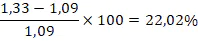
The number of roof bolts per row also increases from five to six. More importantly, the support system changes from single-level rock-bolt support in 11D1-2 to a combined rock-bolt and steel-arch configuration in 18D1-2.
The comparison shows that the two mine workings differ not only in their calculated deformation characteristics but also in the adopted support configurations. The paired ventilation roadway 18D1-2, characterized by greater calculated roof displacement and lower calculated resistance of the roof rocks, is supported by a denser rock-bolt arrangement together with additional steel-arch support.
Relationship between rock mass conditions and support selection
The results indicate that the selection of support parameters cannot be based on mining depth alone. The ventilation decline 11D1-2 is located deeper than the paired ventilation roadway 18D1-2; nevertheless, its automated calculation produces a lower roof displacement and the adopted support system consists of single-level rock-bolt support without additional steel arches.
In contrast, the roof of 18D1-2 is characterized by argillite with a lower Protodyakonov strength coefficient, while the automated calculation indicates greater roof displacement and lower calculated compressive resistance. For this working, a combined rock-bolt and steel-arch support configuration with a higher rock-bolt density is adopted.
From a geomechanical perspective, excavation disturbs the initial stress state of the surrounding rock mass and causes stress redistribution around the excavation contour. The resulting deformation is controlled by the combined influence of the stress environment, rock strength and lithology, excavation geometry, and mining conditions. Therefore, support selection should be based on an integrated assessment of these factors.
The analyzed cases illustrate the practical importance of matching the support configuration to the expected response of the surrounding rock mass. Rock-bolt support contributes to restricting deformation and separation of the near-excavation rock, while additional steel-arch support is incorporated into the combined support configuration adopted for 18D1-2.
Practical implications and limitations
The results support the use of a differentiated approach to support selection for mine workings operating under different geological and geomechanical conditions.
For the analyzed cases, the transition from single-level rock-bolt support in 11D1-2 to combined rock-bolt and steel-arch support in 18D1-2 corresponds to an increase in calculated roof displacement, a reduction in calculated roof-rock resistance, and an increase in rock-bolt installation density.
The present study is based on previously published engineering calculations and support passports and does not include independent numerical modeling or new in-situ measurements. Therefore, the results should be interpreted as a comparative analysis of the reported engineering data rather than as an independent experimental validation of the support systems. Nevertheless, the comparison provides a systematic basis for identifying the parameters that should be considered when assessing support requirements under varying mining and geological conditions.
Conclusion
The comparative analysis of the ventilation decline 11D1-2 and the paired ventilation roadway 18D1-2 at the Shakhtinskaya Mine indicated that the support requirements of underground mine workings are determined by a combination of mining, geological, and geomechanical factors rather than by mining depth alone.
Although the ventilation decline 11D1-2 is located at a greater depth of 402 m, its automated calculation resulted in a calculated roof displacement of 41.9 mm and a calculated compressive resistance of the roof rocks of 35.1 MPa. Under these conditions, single-level rock-bolt support was adopted, with a bolt length of 2.4 m, a density of 1.09 bolts/m², and five roof bolts per row.
For the paired ventilation roadway 18D1-2, the depth adopted for the support assessment was 315 m. Nevertheless, the automated calculation resulted in a greater calculated roof displacement of 58.72 mm. The calculated compressive resistance of the roof rocks was 23.4 MPa at 0.5 Bc and 21.68 MPa at 1.5 Bc. The roof in the analyzed section was represented by argillite with a Protodyakonov strength coefficient of 2.6. Under these conditions, a combined rock-bolt and steel-arch support system was adopted.
The calculated roof displacement for 18D1-2 was approximately 40.1% greater than that for 11D1-2. At the same time, the rock-bolt density increased from 1.09 to 1.33 bolts/m², corresponding to an increase of approximately 22.0%, while the number of roof bolts per row increased from five to six. In addition, steel-arch support with a density of 0.47 frames/m was included in the combined support configuration for 18D1-2.
The comparison indicates that a greater mining depth does not necessarily correspond to a greater calculated roof displacement when mine workings with different geological and geomechanical conditions are considered. The analyzed cases illustrate the importance of considering roof lithology, rock strength, calculated deformation characteristics, excavation geometry, and mining depth jointly when assessing support requirements.
The results support a differentiated approach to support selection, in which the configuration and parameters of the support system are adapted to the specific conditions of each mine working. For the analyzed workings of the Shakhtinskaya Mine, the transition from single-level rock-bolt support to combined rock-bolt and steel-arch support corresponded to greater calculated roof deformation and lower calculated resistance of the roof rocks.
The study is based on published engineering calculations and support passport data and therefore does not constitute an independent experimental or numerical validation of the analyzed support systems. Further research may include numerical modeling of the stress–strain state of the surrounding rock mass and comparison of calculated results with in-situ measurements to assess the performance of different support configurations under varying mining and geological conditions.
-
Tomilov, A.N. (2020). Justification of Mine Working Development Parameters Using Rock-Bolt Support Technology. PhD Dissertation, Karaganda Technical University, Karaganda, Republic of Kazakhstan.
-
Zholmagambetov, N.R., Khalikova, E.R., Demin, V., Bałabas, A., Abdrashev, R., & Suiintayeva, S. (2023). Ensuring a safe geomechanical state of the rock mass surrounding the mine workings in the Karaganda Coal Basin, Kazakhstan. Mining of Mineral Deposits, 17(1), 74–83. DOI: 10.33271/mining17.01.074.
-
Zamaliyev, N., Akhmatnurov, D., Małkowski, P., Demin, V., Ainash, K., Mussin, R., Ganyukov, N., et al. (2026). Rock Mass Bolting in Coal Mine Workings for Floor Heave Control. Applied Sciences, 16(5), 2304. DOI: 10.3390/app16052304.
-
Kamarov, R., Assanova, Zh., Zeitinova, Sh., Azimbayeva, Zh., & Bogzhanova, J. (2026). Influence of Rock Bolt Support Parameters on Geomechanical Stability and Methane Emission in Longwall Mine Workings. Civil Engineering Journal, 12(4), 1465–1479. DOI: 10.28991/CEJ-2026-012-04-013.
-
Kang, H. (2014). Support technologies for deep and complex roadways in underground coal mines: A review. International Journal of Coal Science & Technology, 1, 261–277. DOI: 10.1007/s40789-014-0043-0.
-
Kang, H.P., Lin, J., & Fan, M.J. (2015). Investigation on support pattern of a coal mine roadway within soft rocks—A case study. International Journal of Coal Geology, 140, 31–40. DOI: 10.1016/j.coal.2015.01.003.
-
Tang, B., Yeboah, M., Cheng, H., Tang, Y., Yao, Z., Wang, C., Rong, C., Wang, Z., & Liu, Q. (2021). Numerical study and field performance of rockbolt support schemes in TBM-excavated coal mine roadways: A case study. Tunnelling and Underground Space Technology, 115, 104053. DOI: 10.1016/j.tust.2021.104053.
-
Aliev, S.B., Demin, V.F., Tomilov, A.N., & Miletenko, N.A. (2021). Calculation of Rock-Bolt Support Parameters during Mine Working Development in Coal Mines. Ugol, No. 4, 15–19. DOI: 10.18796/0041-5790-2021-4-15-19.